

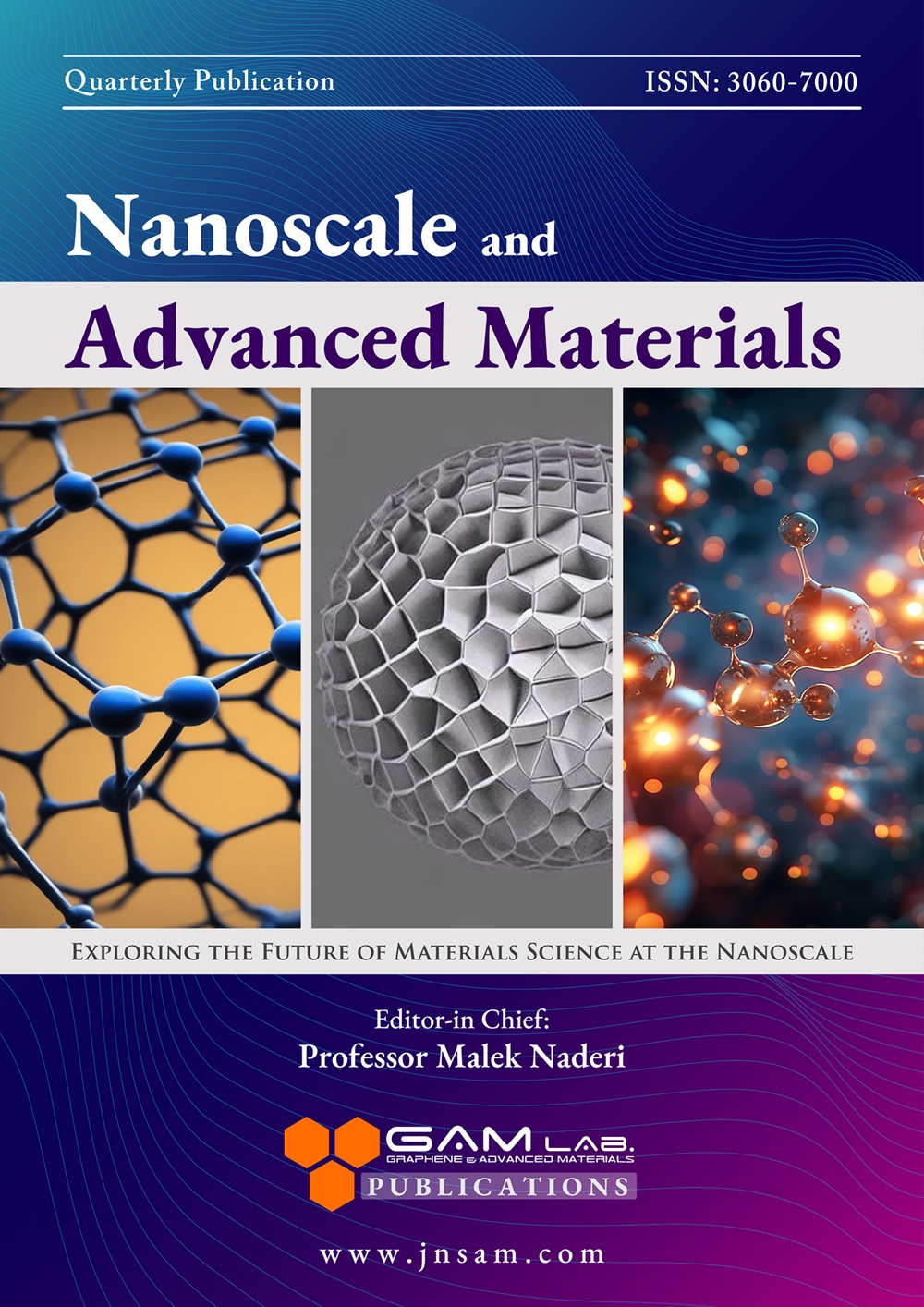
Nanoscale and Advanced Materials


Exploring the Future of Materials Science at the Nanoscale

We are thrilled to introduce “Nanoscale and Advanced Materials (NSAM)” a premier international journal dedicated to the forefront of nanotechnology and advanced materials research. Our inaugural issue marks the beginning of an exciting journey, and we are eager to invite you, our esteemed colleagues and researchers, to join us in shaping the future of science and innovation within these dynamic fields.

NSAM stands as a beacon of interdisciplinary collaboration and cutting-edge research. As a quarterly, open-access, and peer-reviewed publication, we offer a dynamic platform that not only showcases groundbreaking studies but also fosters a rich exchange of ideas across diverse scientific domains. Our mission is to bridge the gaps between materials science, chemistry, physics, and engineering, creating a fertile ground for innovation and transformative breakthroughs.

At NSAM, we recognize the paramount importance of advancing our understanding of nanoscale and advanced materials. Our journal welcomes both experimental and theoretical contributions, placing a particular emphasis on the synthesis, characterization, properties, and applications of nanostructured and nanoscale materials. We are also keen to publish research related to layered materials, hybrid nanostructures, and cutting-edge methodologies such as modelling, simulation, machine learning, and artificial intelligence.

Elevate your research with NSAM

Our publication offers a platform for cutting-edge research in the field of nanotechnology and advanced materials. Submit your work today and connect with our global network of academic and industry professionals.

Join the ranks of leading researchers

Our peer-reviewed publication highlights the latest advancements in novel materials, providing a platform for sharing innovative findings and fostering collaboration within the scientific community.

Showcase your expertise in materials science

Our esteemed editorial board ensures rigorous peer review and high-quality publication, making NSAM the premier destination for researchers looking to impact the future of materials science.

Topics covered in our journal include, but are not limited to:

Synthesis and Fabrication of Nanoscale Materials

Creating nanoscale structures with precision and control is at the heart of nanotechnology. Pioneering methods such as chemical vapor deposition, atomic layer deposition, and molecular self-assembly enable researchers to fabricate materials with atomic-level accuracy. These techniques have revolutionized the production of semiconductors, leading to faster, more efficient electronic devices. For example, the development of silicon nanowires has enabled advancements in transistors, which are critical components of modern computers and smartphones.

Properties and Behaviour of Nanoscale Materials

At the nanoscale, materials exhibit unique physical, chemical, and mechanical properties that differ significantly from their bulk counterparts. For instance, gold nanoparticles have distinct optical properties that make them useful in biomedical imaging and diagnostics. Understanding these properties can lead to new applications, such as developing stronger and lighter materials for aerospace or creating highly efficient catalysts for chemical reactions.

Layered Materials and Their Applications

Innovations in two-dimensional (2D) materials, such as graphene and transition metal dichalcogenides, have opened up new possibilities in electronics, photonics, and energy storage. Graphene, a single layer of carbon atoms arranged in a hexagonal lattice, is renowned for its exceptional electrical conductivity and mechanical strength. It has potential applications in flexible electronics, transparent conductive films, and advanced batteries. The integration of 2D materials into devices can lead to significant improvements in performance and efficiency.

Hybrid Nanostructures

The synthesis and properties of multi-component nanomaterials, or hybrid nanostructures, combine the best attributes of different materials to achieve unprecedented functionalities. For instance, combining gold nanoparticles with magnetic iron oxide can create multifunctional materials useful for targeted drug delivery and magnetic resonance imaging (MRI). These hybrid structures can be tailored for specific applications, offering enhanced performance compared to single-component materials.

Nanoscale Devices and Electronics

The development of miniature devices with enhanced functionalities is a cornerstone of modern nanotechnology. Nanoscale transistors, sensors, and memory devices are fundamental to the advancement of computing and communication technologies. Innovations in this area have led to the creation of high-density data storage solutions and ultra-sensitive biosensors, which have applications in healthcare, environmental monitoring, and security.

Energy Harvesting and Storage

Nanotechnology offers promising solutions for sustainable energy through the development of advanced materials for energy harvesting and storage. Nanostructured materials such as perovskite solar cells and lithium-ion batteries exhibit improved efficiency and capacity. For example, incorporating nanomaterials into solar panels can significantly enhance their light absorption and conversion efficiency, making renewable energy more accessible and cost-effective. Achieving net-zero emissions requires such advancements in solar photovoltaic technologies and other energy harvesting applications.

Nanobiotechnology and Nanomedicine

Applications of nanotechnology in health and medicine are transforming the way we diagnose and treat diseases. Nanoparticles can be engineered to deliver drugs directly to cancer cells, minimizing side effects and improving treatment efficacy. Additionally, nanoscale biosensors enable early detection of diseases by identifying biomarkers at very low concentrations. These advancements hold the potential to revolutionize personalized medicine and improve patient outcomes.

Environmental Applications

Nanomaterials are playing a crucial role in addressing environmental challenges. They are being used to develop efficient water purification systems, remove pollutants from the air, and enhance the performance of renewable energy sources. For instance, titanium dioxide nanoparticles are used in photocatalytic processes to break down organic pollutants in water, providing a sustainable solution for clean water. Nanotechnology also contributes to carbon capture, utilization, and storage (CCUS) efforts, aiding in the fight against climate change.

Nanoscale Catalysis, Sensors, and Actuators

Designing efficient catalysts and sensitive detection systems at the nanoscale is crucial for various industrial and environmental applications. Nanoscale catalysts can enhance the efficiency of chemical reactions, reducing energy consumption and waste. Similarly, nanoscale sensors and actuators are integral to the development of smart systems for monitoring and controlling environmental conditions, industrial processes, and biomedical applications. These advancements are particularly significant in developing novel electrocatalysts and photocatalysts for electrochemical or photoelectrochemical devices, such as those used in green hydrogen production and CCUS technologies.

Computational Modelling and Simulation

Theoretical approaches to understanding and predicting nanoscale phenomena are essential for the design and optimization of new materials. Computational modelling and simulation allow researchers to explore the properties and behavior of nanomaterials at the atomic level, guiding experimental efforts and accelerating the discovery of new materials. These tools are crucial for developing materials with tailored properties for specific applications, such as electrocatalysts and photocatalysts for green hydrogen production.

Machine Learning and AI in Nanotechnology

Leveraging advanced algorithms for material discovery and optimization, machine learning (ML) and artificial intelligence (AI) are revolutionizing the field of nanotechnology. By analyzing vast amounts of data, ML and AI can identify patterns and predict the properties of new materials, significantly speeding up the research and development process. These technologies are enabling the discovery of novel materials with superior performance for applications in electronics, energy, and healthcare.

Join Us in Shaping the Future

We invite you to join us in this exhilarating endeavor. By contributing your original research and perspectives to NSAM, you become part of a global community dedicated to pushing the boundaries of knowledge and driving transformative breakthroughs in nanotechnology and advanced materials. Together, let us explore the uncharted territories of science, innovate at the intersections of disciplines, and address the complex challenges of our time.

Welcome to “Nanoscale and Advanced Materials” — where the future of science and innovation begins.